
Calorie Deficit Explained Simply: What Does It Really Mean?
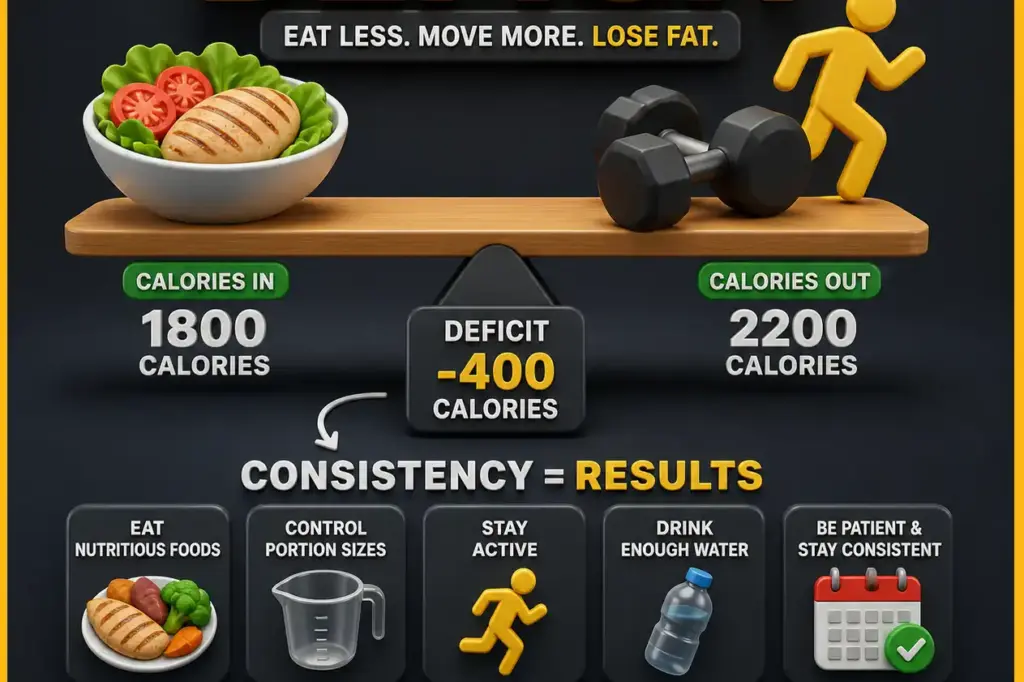
If you’ve ever searched “how does a calorie deficit work,” you’re not alone and honestly, most beginners feel confused at first. However, the truth behind calorie deficit explained simply is actually very straightforward: it means eating fewer calories than your body burns each day.
In simple terms, this creates an energy gap in your body. As a result, your system starts using stored energy mainly body fat to keep your organs, muscles, and daily activities running. Over time, this natural process leads to consistent and sustainable fat loss without requiring extreme dieting. Protein plays a key role in fat loss, as explained in our guide on best protein for weight loss.
Moreover, understanding energy balance for weight loss is the key to long-term success. When calories consumed are lower than calories burned, your body gradually loses fat. On the other hand, when calorie intake consistently exceeds your needs, weight gain becomes inevitable. That’s why learning this basic principle can completely change how you approach fat loss and help you avoid common dieting mistakes.
How It Works Inside Your Body?
To understand calorie deficit explained simply, you need to know what happens internally. Your body requires energy for:
- Breathing and organ function
- Digestion and metabolism
- Physical activity
When you’re in a deficit, your body taps into stored fat. However, if the deficit is too large, it may also break down muscle.
Latest Research Insight 📊
Recent studies published in the National Institutes of Health show that moderate calorie restriction preserves muscle better while supporting sustainable fat loss compared to aggressive dieting.
Additionally, research from the American Journal of Clinical Nutrition highlights that gradual fat loss improves long-term weight maintenance.
Calorie Deficit Explained Simply: Maintenance Calories vs Deficit
Before creating a deficit, you must understand maintenance calories explained. These are the calories your body needs to maintain weight.
| Type | Definition | Outcome |
|---|---|---|
| Maintenance Calories | Calories to maintain weight | No change |
| Calorie Deficit | Fewer calories than needed | Fat loss |
| Calorie Surplus | More calories than needed | Weight gain |
Therefore, creating a healthy calorie intake for fat loss involves slightly reducing calories below maintenance .You can also explore easy fat loss methods in lose weight without exercise.
How Many Calories Should You Cut? (calorie deficit explained simply)
Many people ask, “how many calories should I eat to lose weight”. The answer depends on your lifestyle.
However, general guidelines suggest:
- 300–500 calorie deficit → sustainable fat loss
- 500–750 calorie deficit → faster fat loss
According to the World Health Organization, gradual weight loss is safer and more sustainable than rapid dieting.
Moreover, a calorie deficit for beginners should always start small to avoid burnout.
Calorie Deficit Explained Simply: Why Weight Loss Slows Down
At first, weight loss is faster. However, over time it slows down. This is due to metabolic adaptation weight loss.
Your body:
- Burns fewer calories
- Moves less subconsciously
- Becomes more energy-efficient
This is why people often search “why am I not losing weight in a deficit”.
Therefore, adjusting calories or increasing activity becomes necessary.
Calorie Deficit Explained Simply: Best Diet Strategy for Fat Loss
A successful calorie deficit diet plan is not about extreme restriction. Instead, it focuses on balance.
Key Principles:
- Eat high-protein foods
- Include fiber-rich meals
- Stay hydrated
- Avoid ultra-low calories
Research from the Harvard T.H. Chan School of Public Health shows that protein increases satiety and helps preserve muscle during fat loss.
Best Foods for a Calorie Deficit (calorie deficit explained simply)
Choosing the right foods makes dieting easier. Therefore, focus on high-volume, low-calorie foods.
| Food Type | Examples | Benefit |
|---|---|---|
| Protein | Chicken, eggs, lentils | Keeps you full |
| Fiber | Vegetables, oats | Reduces hunger |
| Healthy fats | Nuts, olive oil | Supports hormones |
| Hydration | Water, herbal tea | Controls appetite |
These foods support calorie deficit without hunger and improve consistency. Food choices matter, so check our guide on top healthy meal plans for weight loss.
How NEAT Helps Fat Loss Without Exercise
Another important factor is NEAT (non-exercise activity thermogenesis).
It includes:
- Walking
- Household chores
- Daily movement
Interestingly, increasing NEAT supports fat loss vs weight loss without intense workouts.
So, if you’re wondering “does walking help calorie deficit”, the answer is yes significantly. For faster results, you can also include workouts like best treadmill workout for weight loss.
How Sleep and Stress Affect Fat Loss
Many people ignore this, but it’s critical.
Poor sleep increases hunger hormones. As a result, cravings rise and discipline drops.
Studies from the Sleep Foundation show that lack of sleep increases calorie intake and reduces fat loss efficiency.
Additionally, stress leads to emotional eating. Therefore, managing stress supports long-term weight management.
How Long Should You Stay in a Calorie Deficit?
A common question is: “how long should you diet”?
Experts recommend:
- 6–12 weeks of dieting
- Followed by maintenance phase
This approach prevents burnout and supports metabolism.
Calorie Deficit Explained Simply: Signs You’re Doing It Wrong
Watch out for these warning signs:
- Extreme hunger
- Fatigue
- Irritability
- Poor workout performance
These are signs your deficit is too aggressive. In that case, increasing calories slightly is the smarter move.
How to Make a Calorie Deficit Sustainable in Real Life
The best approach is flexible and realistic.
Practical Tips:
- Follow an 80/20 diet rule
- Keep meals simple
- Stay active daily
- Prioritize sleep
Instead of perfection, aim for consistency. This supports sustainable fat loss methods.
Conclusion: Calorie Deficit Explained Simply for Long-Term Success
To sum up, calorie deficit explained simply is about eating slightly less than your body needs while maintaining a healthy lifestyle.
However, success depends on:
- Moderate calorie reduction
- Smart food choices
- Consistent habits
- Proper recovery
Ultimately, fat loss doesn’t require suffering. Instead, it requires strategy, patience, and balance.
FAQs About Calorie Deficit
- What is calorie deficit in simple terms?
Calorie deficit means you eat fewer calories than your body uses for energy. This makes your body use stored fat for fuel, leading to weight loss. - How do you figure out your calorie deficit?
First calculate your daily maintenance calories, then subtract 300–500 calories from that number. The result is your calorie deficit target. - Is calorie deficit healthy?
Yes, it is healthy when done moderately with balanced nutrition. Extreme calorie cutting can cause weakness and nutrient deficiencies. - How to do calorie deficit to lose weight?
Eat smaller portions of healthy foods like protein, vegetables, and whole grains while avoiding excess sugar and junk food. Also stay active to support fat loss.